


By: Tini Thangjam
Chocolate is an all time favourite dark brown sweet. It is favoured widely by people of all ages specially children due to its characteristic rich and indulgent flavour. Solid chocolate is the most popular form however it is available as a paste and as liquid too. It is made from a fruit obtained from the cocoa tree (Theobroma cacao) native to Central and South America. It is known to be originated from the Amazon and Orinoco valleys. Its use has been found dating back to even earlier than 1750 BC. In the ancient times, chocolate was consumed as a drink, plenty of evidences have been rooted up from vessels found in archaeological sites to support this statement. During the 15th century, the Aztecs adopted drinking the chocolate as well as the Maya. The Aztecs preferred their drink cold while the Maya preferred it warm. Until the 16th century, no European countries were aware of the chocolate drink. Spain was the first European country to have found the delicacies of drinking the frothy drink. Then its plantation and use became widespread as the English, Dutch and French colonized. Slave trade began booming and as Mesoamerican workers declined it was shifted to the African labourers instead. Several inventions like the water powered and steam powered machines were made in the 1700s that enabled to produce superior chocolate drink from grounding of cocoa beans into fine powder. Despite the traditional consumption of chocolate as a drink, it became increasingly popular in the 18th century to eat solid chocolate.
Due to emerging processes during the Industrial Revolution chocolate production was sped up significantly. A Dutch chemist Coenradd van Houten in 1815 introduced alkaline salts to reduce bitterness of chocolate. Later on, a press was created by him which enabled the separation of cocoa butter from chocolate liquor making it easier to produce and more affordable to people. His innovation marked a new era for chocolate. Years after, talented individuals started creating variations in chocolate such as by introducing milk and various other flavours and components. Nowadays, there is a wide variety of chocolate in the market ranging from plain to hazelnut flavoured, or from baking chocolate to modelling chocolate depending on their use and a person’s preference.
Production of chocolate starts from harvesting ripe and disease-free cocoa pods. These are then allowed to ferment up to seven days by separating the seeds from the pod and pulp. This process transforms the bitterness of the raw cocoa beans to a complex flavour which is a precursor of the desired chocolate flavour. As soon as the fermentation is completed it is immediately dried to prevent mold growth. After this, any wanted materials such as stones, sticks or any other debris is removed. Following step is of utmost important as it is the step that determines the final characteristic flavour of chocolate. This process is known as roasting where the cocoa beans are subjected to heat while simultaneously being stirred. Mostly dry heat is used where no addition of extra oils or fats is needed. This ensures that the chocolate is pure and of top quality. After the roasting process the hull is removed from the bean and the inner nibs are extracted. The nibs are ground into fine powder which contains cocoa solids and cocoa butter. The cocoa butter liquifies due to the heat produced by friction while grounding the nibs. This liquified form of the cocoa nibs is known as the cocoa liquor (can be further divided into cocoa powder and cocoa butter if required). These are then poured into molds and sold in blocks as unsweetened or baker’s chocolate. Now to produce chocolates that we are all familiar with, the cocoa liquor is combined with cocoa butter, sugar, milk, emulsifiers or stabilizers and other components such as vanilla. Difference in the ratios during its formulation results in different types of chocolates. There can be millions of combinations regarding the ratios, it is these combinations that the chocolate manufacturing companies gate keep. In the market we find dark chocolates, milk chocolates and even the bizarre combination of chilies with chocolate.
Eating too much chocolate can increase the risk of diabetes as it contains added sugars. Specially milk chocolates contain high amount of sugar, moreover they are high in calories. They are also known to increase LDL cholesterol due to the presence of saturated fat. In addition, some report it being linked to hypertension and headaches. However, as dark as it may seem all is not lost. Chocolate offers wide range of health benefits. The higher the cocoa content, the more the benefit. As cocoa content increases, sugars and fats are reduced, as in dark chocolates. Despite this, one should always check the label to clearly know the levels of their ingredients. In contrast to sweetened chocolates, a study suggests consuming darker chocolates having plant sterols and cocoa flavanols as a part of a low-fat diet, may support cardiovascular health by lowering LDL cholesterol and improving blood pressure. This particular study was published in The Journal of Nutrition. Many other studies conducted by scientists at Harvard Medical School, found drinking hot chocolate linked to improved cognitive function and blood flow to the brain of older people. Another experiment published in 2014 stated that the cocoa extract known as lavado prevents or reduce damage in the nerve pathways of Alzheimer’s patients. It is reported that consumption of about 2 ounces of chocolate per week reduces the chance of having stroke as compared to other people that don’t consume chocolate. It is also known to boost oxygen while performing athletic activities. This was said in an article published in The Journal of the International Society of Sports Nutrition.
Chocolate offers a lot to our body in aspects for improving health. One should try to avoid too much sweet chocolates and substitute it for darker chocolates whether solid or liquid. Even though the packaging might say dark chocolate, it is safer to double check the labels and look for your desired sugar and fat percentages. This timeless dark and rich chocolate that was assumed to be bad for health has now been clarified and all of its benefit are slowly unveiling year after year. Therefore, lets wait patiently for more facts to be yet known.
(The writer has finished her Bachelors in Food Technology from College of Food Technology, CAU, Lamphel, Manipur. The writer can be reached at [email protected])
The Dark and Decadent Slab: Chocolate
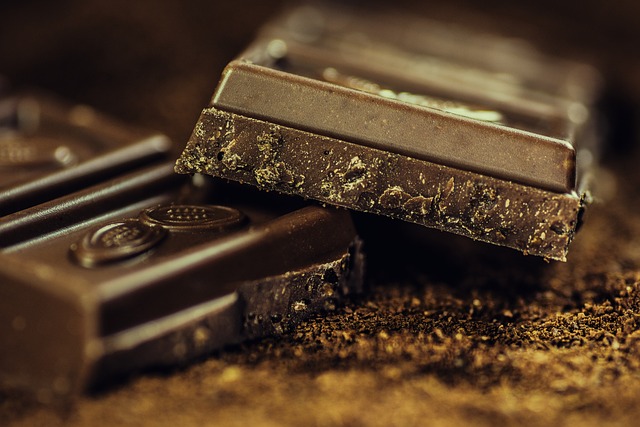
Image by Alexander Stein from Pixabay
1.7K

previous post